Another incredibly long day in the field, and not the most pleasant one at that. The four of us went out to Lake Ottawa, that incredibly beautiful lake that I've talked about before, to look for more crayfish, collect RNA samples, and find smallmouth bass eggs. The weather was absolutely awful: it was overcast and probably in the 50's which is quite cold considering we were going swimming. I was decked out in a full heist man's outfit: two wetsuit layers, booties, a hood, and one glove (one exposed hand for ultimate crayfish catching). We ended up visiting five sites in the opposite order that we visited last week for an ultimate day of research collecting! Here's the breakdown of what we were collecting: the 15 males and 15 females is for Bradley's independent project where he's going to be dissecting the gut content of the rusty crayfish. Lindsey was looking for large numbers of crayfish to look for a parasite, and Ashley was doing RNA processing which involves the extraction of a bit of sample from the liver-type organ in the crayfish. This is similar to the method that Lindsey was doing yesterday: the crayfish must be broken in two while it's still alive. but, all is not lost because then the body would be placed in a ziploc and placed on ice in a cooler for bradley to dissect later. although, the horrible and terrifying thing is that when I went to put the crayfish in the freezer back at the ND research station, some of the crayfish were still moving, even after hours on ice. this is why I'm not sure I could do research: I honestly don't think that I can/want to do something like break an animal open, alive. I helped with Ashley's tissue extraction for RNA processing by sterilizing her tweezers and placing each dying crayfish in the bag and rolling it in a little creepy crayfish coffin-burrito.
Here are the specific sites we visited and how much we collected from each.
Site 1: 15 males, 15 females. RNA processing. Some bass eggs, and spawning(!)
Site 2: 15 males, 15 females. RNA processing.
Site 3: 230 males and females (huge spike for Lindsey's experiment)
Site 4: 15 males, 15 females.
Site 5: 15 males, 15 females. RNA processing. Lots of bass eggs; aggressive male
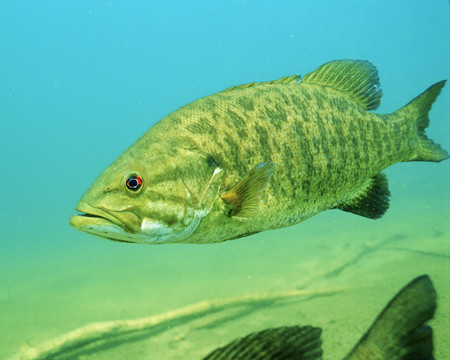
Site 1's highlight was definitely seeing the two bass spawning! How it works is that the male prepares a nest closer to shore and then goes out to deeper waters where he brings back a lady friend. He then nudges and bumps into her until she releases her eggs, at which time she returns back to the open water and the male then defends the nest.
Site 4 was especially difficult because there was no cobble substrate, which is the preferred habitat of the rusty crayfish and makes it easier for me to just lift a rock and scoop/nudge the crayfish into my net. instead, if I saw a crayfish, I had to rely on my ninja instincts and just shoot my hand out to encircled it and grab it. this was the first time I took such a direct approach to catching crayfish, but it was kind of fun. however, due to the poor visibility conditions, I only caught 5 crayfish (usually I would get about 10) and could only get them if I was right on top of them.
Site 5 was also cool because there was a particularly aggressive male defending his nest. sometimes the bass will be kind of skittish and actually swim away when something as big as a human comes by, but this male was the world's #1 bassdad and fought incredibly to protect his eggs. he was bumping us as we were snorkeling, and even bit lindsey in the finger and toes as she attempted to collect a portion of his eggs (really, just a "drop in the bucket"). It was really quite exhilerating, he was like the lake's equivalent of seeing a small shark zoom by.

No comments:
Post a Comment